Roods, Perches and Acres: Old Measurements That Still Matter in House History Research
When exploring the history of a home, whether a centuries old cottage or a Victorian terrace, you will quickly encounter a fascinating layer of historical terminology. Among the most common, and often the most confusing, are the land measurements known as the acre, the rood and the perch. These older units appear in tithe maps, enclosure awards, estate papers, deeds and parish records stretching back many generations.
But what do they actually mean? And why are they still so important when uncovering the story of your home?
This guide explains these historic measurements and their relevance to house history research today.
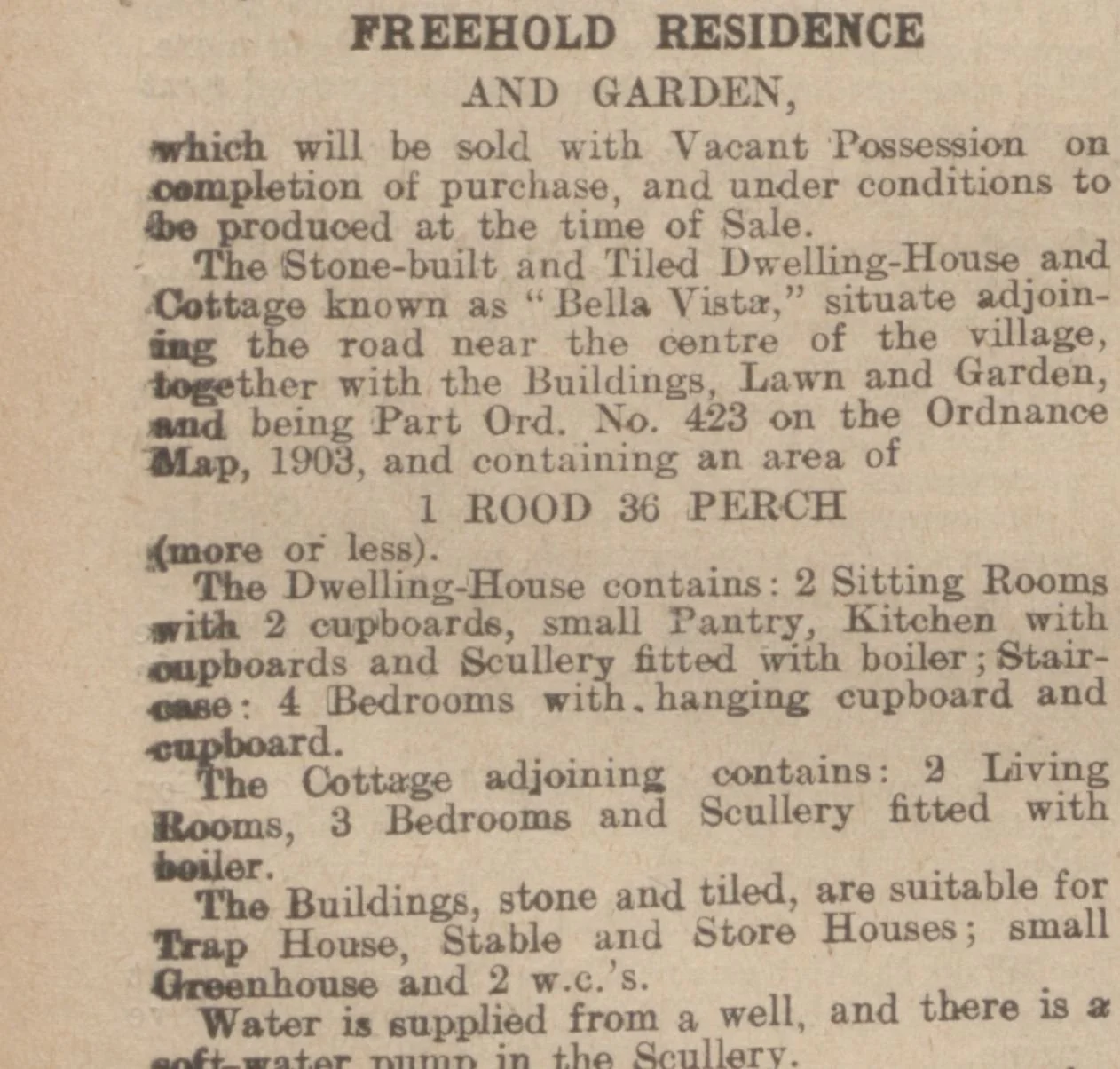
Source: Wells Journal 9 Feb 1923 (front page).
Understanding the Old Measurements
Before metric units existed, and long before modern standardisation, Britain relied on traditional agricultural measures that evolved in the medieval period.
The Acre
The acre is the most familiar unit today. Historically, it represented the amount of land a plough team could till in a single day. It is now standardised as:
1 acre equals 4,840 square yards, which also equals 4 roods
The Rood
The rood is one quarter of an acre. It was commonly used for plots that were too small to be expressed as whole acres.
1 rood equals 40 perches
The Perch
The perch, sometimes known as a rod or pole, is the smallest of these units. It appears in both length and area:
• Length: one perch equals 16.5 feet
• Area: one perch equals one square perch, which is one fortieth of a rood
1 acre equals 4 roods and 160 perches
These measurements shaped rural life for centuries. They were used to divide fields, assess taxation and describe land in legal documents of all kinds.
Why These Units Matter in House History Research
Although no longer used in modern land registry documents, acres, roods and perches remain essential when studying older properties. They appear repeatedly in historic sources and often provide key clues about the development of a home and its surroundings.
1. They reveal the original size of a plot
Tithe maps and apportionments from the nineteenth century list every parcel of land in acres, roods and perches.
For example:
One acre, two roods, twelve perches
By understanding these units, you can compare the historic plot with the modern boundaries and see what has changed over time.
2. They help identify your home on historic maps
Early maps often describe plots by number and size rather than by clearly drawn buildings.
Knowing the measurement of a parcel helps identify which piece of land eventually became your home.
3. They uncover agricultural origins
Many houses, especially those built before 1920, began life as cottages for agricultural workers, smallholdings or buildings linked to estate land.
The amount of land attached to a dwelling can reveal how it was originally used.
4. They support the reconstruction of property history
Historic deeds often describe land like this:
A dwelling house and garden containing twenty two perches, more or less
Understanding these measurements allows you to:
• trace boundary changes
• understand how the land was divided
• follow the chain of ownership more clearly
5. They connect your home to the wider landscape
A parcel of three acres and one rood might indicate an orchard, grazing field or even a medieval strip holding.
Land size is one of the clearest indicators of how the surrounding environment has changed over time.
A Simple Guide to Converting Roods and Perches
These quick conversions are useful when interpreting documents:
• One acre equals four roods
• One rood equals forty perches
• One acre equals one hundred and sixty perches
Example:
A plot described as two acres, three roods and sixteen perches becomes:
• two acres
• three roods equals three quarters of an acre
• sixteen perches equals one tenth of an acre
Total: approximately two point eighty five acres
Where You Will Encounter These Measurements
Expect to see acres, roods and perches in the following sources:
• Tithe maps and apportionments
• Enclosure awards
• Estate plans and rentals
• Early Ordnance Survey mapping
• Deeds and conveyances dated before the twentieth century
• Land tax assessments
• Historic property sale notices
They are especially common for homes with origins before 1900 but appear well into the early twentieth century in rural locations. They may simply be denoated as P:R:A (for Perches, Roods and Acres).
Bringing Everything Together
Understanding these older land measurements may seem like a minor detail, yet they unlock surprising insights into your home’s story. They help decode historical documents, interpret old maps and reconstruct how your property evolved over time.
At House Chronicles Co, we routinely interpret acres, roods and perches as part of our research process. This ensures that every home history is accurate, clearly explained and grounded in the surviving historical record.
If you are curious about the story of your home, our range of research packages can help you uncover it, from simple overviews to detailed explorations of the people and events that shaped your property.
